Building on a ‘landmark year’ and thinking ahead
12 January 2012 | by Prof. John Ruggie
In a relatively short period of time we have managed to achieve unprecedented convergence among major international standard setting bodies regarding the steps states and business enterprises must take to meet their respective human rights commitments under the UN “Protect, Respect and Remedy” Guiding Principles...
On International Migrants’ Day: A Call for Migration With Dignity
16 December 2011 | by Frances House
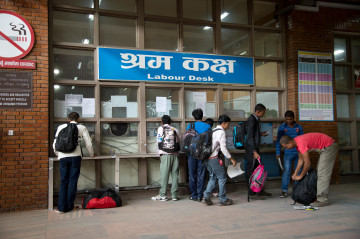
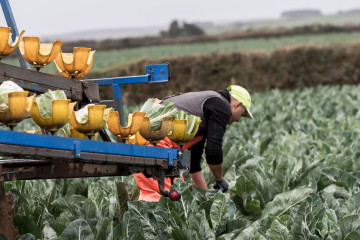
International Migrants' Day (18 December 2011) is a time to take stock of the state of migrant worker rights around the world. More than 215 million international migrants living outside their countries of origin play a vital role in the global economy. But it is also true that the vast majority of migrants today are low-paid workers in industries ranging from apparel, electronics and construction to agriculture, hospitality, and domestic service.
Are business leaders ensuring respect for LGBT rights?
14 December 2011 | by Kathryn Dovey
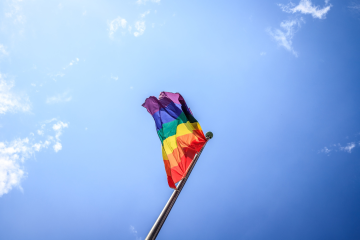
Last week, to mark International Human Rights Day, US Secretary of State Hillary Clinton delivered a landmark speech recognizing Lesbian, Gay, Bisexual and Transgender (LGBT) rights as human rights. Reactions to the speech within the human rights and LGBT communities were extremely positive with many recognising this as a brave and vital statement. At the same time, some US-based organisations and Republican presidential candidates criticized Clinton’s remarks...
Social Media & Human Rights: Keeping the virtual world one step ahead of the real world
12 December 2011 | by Salil Tripathi
To mark International Human Rights Day 2011, I had the privilege of joining an event at the United Nations in Geneva with some outstanding individuals who have used the power of the Internet to do exceptionally brave things in their countries. They have used their blogs, and a variety of other tools to inform and empower people in difficult contexts and environments...
Joint action needed to address land grabbing
02 December 2011 | by Marina d’Engelbronner-Kolff
For the past decade, foreign investors have been looking for greener pastures in Africa. Some foreign governments and private enterprises acquire long-term leases of large portions of arable land as part of efforts to secure sufficient food and energy for their home populations. Such actions could be explained in human rights terms. This is not the case, however, if foreign governments are acquiring land only with a view to trade in international markets...
Time for tourism industry to put human rights on its agenda
07 November 2011 | by Patricia Barnett
This week, over 47,000 tourism industry representatives from 189 countries will convene in London for the annual World Travel Market. Business deals worth millions of dollars will be struck and thousands of tourism products will be bought and sold. These products combine services, cultures, people, and places. However, it should not be forgotten that these places are peoples’ homes, and the people, their cultures, and the natural environment, are what make the places so alluring for us as tourists to visit...
Silicon Valley Human Rights Conference: Not your ordinary discussion on business and human rights
27 October 2011 | by Salil Tripathi
I was invited to speak at the 2011 Silicon Valley Human Rights Conference (organised by the NGO Access Now), where the tone of the dialogue, and the level of conversation, has been in marked contrast to what I have seen with similar conversations in other industries...
Robinson and Ruggie bring a lot to the table
27 October 2011 | by John Morrison
Jack Ucciferri's op ed in the Huffington Post laments a world facing a “fundamental democratic deficit”. We share Mr. Ucciferri’s impatience with persistent economic and social injustice in countries from every region, but find his criticisms of former Irish President Mary Robinson and Harvard professor and former United Nations official John Ruggie misguided and ill informed...
Teaching Business and Human Rights: Challenges and Opportunities
19 October 2011 | by Anthony Ewing
Today, informed by the conceptual underpinnings provided by the UN Framework and Guiding Principles on Business and Human Rights and the practical experience of companies trying to manage human rights impacts, more and more individuals in the private sector, government and civil society are grappling with the full range of human rights issues touching all business activity and relationships...
Continuing a Dialogue with Vodafone on Human Rights Due Diligence
06 October 2011 | by John Morrison
Media coverage of the recent Labour conference speech by Ed Miliband, in which the UK opposition leader criticised “predatory” companies” prompted me to write to the Financial Times with the straightforward but too often forgotten message that even “good” companies can sometimes do “bad” things...
Trade unions building bridges to protect migrant workers
17 August 2011 | by Jeroen Beirnaert
Bangladesh is a major country of origin of migrant workers. Whereas migrant workers in general represent a contribution of 13% of the Bangladeshi GDP in remittances, they largely remain unprotected and often face serious exploitation and abuse throughout their entire migration experience...
One Day in South Africa, Two Events, and a Major Milestone for Financial Institutions.
03 August 2011 | by Motoko Aizawa
On 19 July, a workshop was convened by the law firm Cliffe Dekker Hofmeyr, the University of Witwatersrand, and the Institute for Human Rights and Business, on the topic of Financial Institutions, Human Rights and International Best Practices. The event was probably one of the first of its kind to explore the nature and extent of financial institutions’ responsibility to respect human rights.
What are rights without enforcement?
27 July 2011 | by Kate Wareing
For most of us, the idea of being deliberately misled over the content of our contracts, having our wages spuriously docked, or even having our wages withheld without reason, is something that we don’t expect to happen. Yet such workplace exploitation occurs in the UK and it keeps those who are most vulnerable trapped in poverty and at the mercy of their employers.
Cash, Crisis, Conscience: How can the financial sector ensure it respects human rights?
18 July 2011 | by Motoko Aizawa
When I speak with bankers, they all say they want financial institutions to be recognized as respected members of society. Is it enough for the sector to be able to better address risks management, ESG sustainability, business ethics, and long-termism? Can the sector reinvent itself through its own initiative, along with the growing pressure of soft law, and the threat of regulation hanging over its head?"
How can the media ensure it lives up to its responsibility to respect human rights?
13 July 2011 | by Salil Tripathi
Public outrage in Britain against intrusive journalism has reached boiling point. Disclosures concerning actions taken by the tabloid News of the World alongside new allegations that two newspapers from the same company, the Sun and the Sunday Times, may have obtained personal information about former Prime Minister Gordon Brown...
Human Rights: The case for regulation
26 June 2011 | by John Morrison, IHRB Executive Director
It is not unknown for business leaders to call for increased or better regulation in relation to environmental or social issues. In 2002, Mark Moody-Stuart (the former CEO of Shell and Chair of Anglo-American) led the business call for a binding global agreement on renewable energy at the World Summit for Sustainable Development in Johannesburg...
UN Adopts Guiding Principles on Business and Human Rights - What Comes Next?
17 June 2011 | by Scott Jerbi, IHRB Director of Communications
The unfolding business and human rights story reached an important threshold this week with the unanimous endorsement by the United Nations Human Rights Council of Guiding Principles for the implementation of the UN’s Protect, Respect, Remedy policy framework on business and human rights.
The Elephant in the Room: Addressing International Investment Conditions to Improve Human Rights
14 June 2011 | by Haley St. Dennis
Over the past two decades, international investor-State dispute arbitration has exploded alongside a surge in Bilateral Investment Treaty (BIT) ratifications. The International Centre for the Settlement of Investment Disputes (ICSID) is cited within some 2,400 BITs – making the ICSID one of the main arbitration forums for international investor-State dispute settlement.
The Good, The Ad, and the Ugly: How not to prepare ad campaigns on human rights and business
06 June 2011 | by Salil Tripathi
Last week a slickly-made video began to circulate on the Internet, apparently produced by the advertising company JWT for its client Vodafone. The video shows Egyptians joining the protests that led to the fall of the Hosni Mubarak regime. While the video makes no claims for starting the revolution, it drops broad hints as it tries to ride on its coattails, that it played some role...
What do GRI's latest Guidelines say about Human Rights?
24 May 2011 | by Marjolein Baghuis
When John Ruggie presented the finalized Guiding Principles on Business and Human Rights in March, the United Nations Special Representative was quick to assert that "even the most concerted efforts cannot prevent all abuse." Instead, the Guiding Principles for implementing the UN
'Protect, Respect and Remedy' Framework were positioned as marking “the end of the beginning” in terms of supporting “the effective prevention of, and remedy for, business-related human rights harm.”
The Reshaping of Amnesty International’s Business and Human Rights Work
18 May 2011 | by Peter Frankental
As Amnesty International celebrates its 50th anniversary, its involvement in the field of business and human rights is taken for granted. But this wasn’t always the case. For the first 30 years of Amnesty’s existence, the human rights impacts of business lay beyond its remit...
From Red to Green Flags
02 May 2011 | by Nick Killick
How can a company ensure respect for human rights in countries where the government is failing in its own obligations?
This question lies at the heart of a new report published today by the Institute for Human Rights and Business (IHRB) - From Red to Green Flags: The corporate responsibility to respect human rights in high-risk countries.
Caught in the Crossfire: What should companies do to protect workers in an armed conflict?
29 April 2011 | by Salil Tripathi
Armed conflict often forces companies to suspend their operations. But what happens to their workers? Foreign companies operating in Libya had to face this question in the early days of the popular uprising against the Gaddafi regime...
A personal tribute to Sir Geoffrey Chandler
11 April 2011 | by Chris Marsden
Many people will write tributes to this great man, with memories of his warm friendship, his unerring courtesy, his delight in debate, his terrier-like pursuit of a just cause and his bluntness of expression when someone or some organisation he thought should have done better somehow failed to do so...
Protecting Human Rights and Environmental Defenders: OECD and Business Should 'Challenge Conventional Wisdom'
05 Apr. 2011 | by Lauri R. Tanner
There is clearly a great need for the international business community, home governments of corporations and host countries to seek concrete ways to actively respect and protect environmental & human rights defenders. Two current processes provide important opportunities to do just that.
Are Companies Ready to Implement UN Guiding Principles on Business and Human Rights?
31 Mar. 2011 | by Scott Jerbi
The much anticipated Guiding Principles on Business and Human Rights prepared by United Nations Special Representative John Ruggie to implement the UN 'Protect, Respect and Remedy' Framework on business and human rights were released...
Will We Learn Lessons from Japan?
24 Mar. 2010 | by Auret van Heerden
Right now a few hundred of the bravest people on the planet are trying to prevent a meltdown at the Fukushima nuclear power station. They are being exposed to extremely dangerous levels of radiation and their rights at work have had to be sacrificed to save hundreds of thousands of people from harm.
What Does Water for All in Kenya
imply for Business?
22 Mar. 2011 | by Maina Mutuaruhiu
Kenya, in addition to being a signatory to the International Covenant on Economic Social and Cultural Rights has a new constitution, which expressly recognizes the right to water. Article 43 (1) (d) provides that every person has a right to clean and safe water in adequate quantities. Making this a reality in Kenya is a daunting task.
Conflict no excuse for
business to act irresponsibly
15 Mar. 2011 | by Mary Robinson
As violence in Libya continues, tens of thousands of migrant workers await ferries that can take them to safety across the Mediterranean. So what should be expected of employers operating in situations of conflict and civil unrest who have profited from cheap migrant labour for so long?
Land, Water and Food: Advancing Human Rights Due Diligence
28 Feb. 2011 | by Wambui Kimathi
In Feb. 2011, IHRB in partnership with the Kenya National Commission on Human Rights (KNCHR) brought together representatives from governments, National Human Rights Institutions (NHRIs), business, civil society organizations, researchers, and professional association representatives for a two-day event seeking to provide greater clarity around the human rights responsibilities of the private sector on issues relating to land, water and food.
How Businesses have responded in Egypt
07 Feb. 2011 | by Salil Tripathi
Sustained criticism online and from human rights groups has had some effect on Vodafone: the company is listening. Late last week, the company announced that it will not disconnect the accounts of customers in Egypt who are in arrears, and continue to provide access to everyone on a pay-as-you-go contract, until the crisis is over.
How should Internet and Phone Companies respond in Egypt?
Updated: 04 Feb. 2011, 01 Feb. 2011 | by Salil Tripathi
The explanation Vodafone offered for its decision to switch off its mobile telephone network in Egypt last Friday - that it had no other choice except to comply with the governmental demand - was straight from the text-book. The problem is, human rights discourse, including the idea of corporate responsibility to respect human rights, has moved on from that explanation.
Protect, Respect, Remedy - an embraced framework for business and human rights?
21 January 2011 | by John Morrison
Last week, a Wilton Park conference brought together 17 governments from all global regions, as well as leading thinkers and practitioners, to reflect on an important emerging development in the ongoing struggle to protect human rights around world - a proposed new United Nations Framework on Business and Human Rights (WP 1074).
Responsibility to Respect in the Age of WikiLeaks: Time for Clarity
20 December 2010 | by Salil Tripathi
The controversy over WikiLeaks has raised five separate but interlinked issues from the human rights perspective. The critical issue is the respect for free speech within the private sphere. This issue will remain at the forefront of the international debate, as more and more companies take on responsibilities for which at one time the State had monopoly.
Slavery in supply chains: what companies can do
06 December 2010 | by Daniel Viederman
The word slavery conjures up images of a history we thought we put away. Resolving slavery in supply chains is not easy. No contemporary global corporation has chosen consciously to enslave people. Companies are implicated because they do business in a way that obscures the places their products come from, and the people who do their work.
Vulnerable livelihoods, vulnerable communities
01 December 2010 | by Christine Jesseman and Emily Keeble
Informal sector livelihoods play a critical role in preventing millions of people throughout the world from facing a life of extreme poverty and vulnerability. However, in some cases the loss of these livelihoods as a result of large-scale commercial activity is not being adequately compensated for under international best practice for corporate social risk management, leading to an exacerbation of this vulnerability.
International Code of Conduct for private security providers: a multi-stakeholder Initiative of the 21st century?
24 November 2010 | by Nils Rosemann
Last week in Geneva, nearly 50 global private security firms came together to sign an International Code of Conduct (ICoC) with the objective of strengthening respect for human rights and humanitarian law within their operations.
Universal Children's Day: Time to End the Worst Forms of Child Labour
18 November 2010 | by Joanna Ewart-James
November 20 marked Universal Children’s Day. Established by the United Nations over 50 years ago, it is a day to encourage countries to initiate action to promote the welfare of children. This year Anti-Slavery International is calling upon the government of Uzbekistan to end the use of state-sponsored forced child labour to collect its annual cotton harvest.
Rural Economies: the keystone of food security
14 October 2010 | by Dr. Juan Gonzalez-Valero
The topics of hunger, poverty, and food security dominate the headlines as the Committee for World Food Security meets in Rome this week leading up to World Food Day on Oct. 16. Last month, world leaders met at the UN Summit on the MDGs in New York to discuss progress made since these were set 10 years ago.
Rough Business: Diamonds and Conflict
14 September 2010 | by Ian Smillie
The campaign to halt ‘conflict diamonds’ began in the early part of the 2000s, several years before Leonardo DiCaprio’s Blood Diamond film, and long before Naomi Campbell and Mia Farrow testified at the war crimes trial of former Liberian President Charles Taylor. So people might be forgiven in thinking that the problem has been solved.
Controversy Over Niger Delta Oil Pollution Study: Getting to the Facts
08 September 2010 | by Bjorn Edlund
The gaps between stakeholders embroiled in the ongoing debate over the curse of oil in Nigeria crystallized again when The Guardian turned the spotlight in a recent article on a UN Environment Programme (UNEP) study assessing the environmental impact of oil spills in Ogoniland in the Niger Delta.
Controversy Over Niger Delta Oil Pollution Study: Safeguarding Independence and Impartiality
08 September 2010 | by Irene Khan
Environmental and human rights groups claim the UNEP study is biased because it has been funded entirely by Shell’s Nigerian subsidiary (SPDC). Putting aside for the moment the rights and wrongs of the finding, let’s consider the broader issue of the funding of the environmental impact study by Shell.
Are Current Approaches to Responsible Supply Chain Management working?
August 12th 2010 | by Sune Skadegaard Thorsen
Over the past two decades, leading corporations have increasingly recognised human rights risks in suppliers’ operations; sweat shops, child labour, forced labour, no living wage, discrimination, safety and health neglect and similar violations. However, current research suggests that despite greater attention...
Where is Corporate Social Responsibility Heading?
July 21st 2010 | by Auret van Heerden
The global economic crisis has shaken the manufacturing industry to its core over the last couple of years, and the impact on workers has been palpable around the world. Consumers are more closely evaluating their purchasing decisions and taking greater stock about how the products they buy impact the world. Companies that build strong CSR programes into their operations and culture will have the edge in many markets...
Responsibilities Beyond Borders
June 30th 2010 | by Salil Tripathi
The explosion on an oil rig in April which was operating one of the Gulf’s deepest oil wells killed eleven workers. Many have praised President Obama’s response to the BP disaster. Yet few have noted how markedly different it was from the way the US State Department reacted when an Indian court...
World Cup, South Africa 2010 – facing up to responsibilities
June 15th 2010 | by Steve Ouma
The World Cup is a major event for South Africa. Appropriately enough, it is being celebrated as an international vote of confidence not only in the country, but also the continent. It is in that regard that the steps the cup’s organizers have taken to ensure that the event goes through smoothly are particularly troubling...
Checking in on Corporate Human Rights Reporting: Where We Are, Where We're Going
June 1st 2010 | by Elizabeth Umlas
Where are we today on corporate human rights reporting? In a nutshell, most companies do not report at all on human rights, and many that do report on human rights do so selectively. On a positive note, a few companies are pushing the bar up at the top, showing that it is possible to produce useful reporting on human rights...
The SRSG reports on further steps taken towards operationalising the "Protect, Respect and Remedy" framework
May 25th 2010 | by Peter Muchlinski
The 2010 Progress Report of the Special Representative of the UN Secretary General on human rights and business, John Ruggie, on the operationalisation of the “protect, respect and remedy” framework, places numerous policy ideas onto the agenda that could transform the state of corporate practice and legal redress...
Towards Responsible Corporate
Behaviour in Conflict Zones
May 19th 2010 | by Heloise Dumont
With the globalization of economic activities, in certain areas of poor governance, power has effectively shifted from State to corporations. Through their activities, business entities potentially impact upon every human right and, in times of conflict, may abuse humanitarian law. Imposing clear duties on corporations, both in negative terms as well as in positive terms is a challenge...
UK General Election 2010
May 5th 2010 | by John Morrison
The outcome of this week’s election in the UK (6 May) looks as if it will be close. Perhaps unsurprisingly, the links between human rights and business are not prominent in the manifestos of any of the main parties. But corporate responsibility and accountability clearly are issues that will have to be addressed by whichever party takes office...
Putting the "Protect, Respect, Remedy” Framework into Practice
April 29th 2010 | by John Ruggie
Last week, the latest report under my mandate as Special Representative of the U.N. Secretary General on business and human rights was released in advance of the June session of the U.N. Human Rights Council. This is my last interim report before I submit my final recommendations next year.
Vulnerable workers, vulnerable brands: migrants in the supply chain
April 21st 2010 | by Stephen Rylance
“All our employers are interested in is our work. When there’s no work, they kick us out. We want to be treated like human beings, not like animals.” Abdelilah, a 28 year old Moroccan, works in the Spanish agricultural town of El Ejido, on the coast of Andalusia. While there is a great deal that companies can do in their own supply chains to root out exploitation of migrant workers, this remains at bottom a global, systemic problem.
Relax the Grip: A role for mediation in business and human rights disputes
April 7th 2010 | by Caroline Rees
Often when I talk to or hear about companies that are facing a growing conflict with communities, it reminds me precisely of someone trying to climb a palm tree. The company goes into full tree-hug mode. And the tighter they hug, the less the chance of reaching a solution. Yet it can be precisely by seeking genuine dialogue in a spirit of partnership that companies can increase the chances of resolving the dispute.
ISO 26000: A New Standard for Human Rights?
March 23rd 2010 | by Adrian Henriques
ISO 26000 will be a standard for social responsibility produced by the International Standards Organisation (ISO). In the last few weeks a vote was taken by the national standards bodies that compose ISO’s membership. It was closely fought - but despite controversies and pressures, the outcome was that...
The Voluntary Principles at 10: - time to complete the work of construction,
get on with the job of implementation
March 17th 2010 | by Bennett Freeman
As the Voluntary Principles on Security and Human Rights plenary convenes in London this week, a pivotal agenda awaits participants that will frame the issues and decisions which must be made if the Voluntary Principles (VPs) are to fulfill their potential a decade after the original dialogue was launched.
Have the Voluntary Principles realised their full potential?
March 17th 2010 | by Salil Tripathi
Extractive industries have little choice but to operate where they find resources. As a result, they may find themselves in conflict zones, facing human rights abuses taking place in their area of operations. Many have argued that since these abuses take place within their sphere of influence, companies have a responsibility to act.
Putting Gender Equality on the Business and Human Rights Agenda
March 10th 2010 | by Kathryn Dovey
This week the United Nations is launching a set of Women’s Empowerment Principles as part of events to mark International Women’s Day 2010. The principles – an initiative of the UN Global Compact (UNGC) and the UN Development Fund for Women (UNIFEM) – are a code of conduct for companies on gender equality.
Knowledge of Human Rights Risks: Company Friend or Enemy?
March 3rd 2010 | by John Sherman
If we have learned nothing else from the financial crisis, it is this - the failure by companies to understand and respond to the true nature and depth of their risks can devastate them and society. This principle is as true for human rights risks as it is for other company risks. Companies should conduct "human rights due diligence"...
Do you want to contribute to UN work on business and human rights? Now's your chance
February 24th 2010 | by Christine Bader
What does a good corporate human rights policy look like? What should trigger a company's assessment of its human rights impacts? When should human rights be integrated into other business processes, and when should they stand alone? Views on these questions and many more are being gathered on an online forum: www.srsgconsultation.org.
Where the rubber meets the road:
Human Rights, Business and Local Government
February 9th 2010 | by Jorge Daniel Taillant
The first oddity of a local government discussion about human rights (not to mention business and human rights and local government) is that generally when we think of human rights we think national. Why?
Business, Human Rights and Accountability
Posted: February 2nd 2010 | by Nick Howen
This week, in place of our regular blog, we remember the contribution of Nick Howen to the field of business and human rights by reproducing a speech he gave in 2005 on 'business, human rights and accountability'.
Financial Reform: Making the Human Rights Case
January 27th 2010 | by Mary Dowell Jones
In announcing his financial reform proposals last week, US President Barack Obama pledged: "never again will the American taxpayer be held hostage by a bank that is too big to fail." But does the President’s plan address many of the wider and more fundamental problems that led to the credit crisis?
Small Change: Why Business Won't Save the World
January 19th 2010 | by Michael Edwards
What’s the best way for business to contribute to realising human rights? I’ve been pondering that question over the last few days in the light of Google’s decision to oppose censorship and protect the email accounts of activists in China, going so far as to threaten the closure of its Chinese operations in direct opposition to its own financial bottom line...
Google China decision 'remarkable, courageous, and far-reaching'
January 14th 2010 | by Salil Tripathi
The global Internet giant Google has taken a remarkable, courageous, and far-reaching decision when it said it would stop censoring its search engine in China. While Google’s response has been polite, it is firm. There is a line it will not cross...
The Institute's Challenge
December 14th 2009 | by Chris Marsden
The current economic crisis has exposed fundamental flaws in the free market system. Although powerful, short-sighted vested interest may be urging that we return to the market system as it was, this cannot be allowed to happen...
Business willing to engage, but a multi-stakeholder effort is needed to create lasting change
November 30th 2009 | by Jeffrey Swartz
It has taken us 15 years to get to where we are – to create what can only be called a “baseline” for human rights; we cannot allow 15 more years to pass before we operationalize and scale efforts to ensure dignity and human rights within supply chains globally...
The bitter harvest of Uzbek Cotton - Reflections on the business role amidst a human rights tragedy
November 24th 2009 | by Bennett Freeman
Once again in Uzbekistan this autumn, another bitter harvest is ending. Observers from different regions around the country are reporting that between 1.5 and 2 million teenagers, as well as children as young as nine years old, are missing school and instead picking cotton...
Getting Land Acquisition Right
November 18th 2009 | by Salil Tripathi
"Eminent domain" (also known as "appropriation", "compulsory purchase" or "expropriation" in some countries), the legal principle under which a government can take over private property for public purpose after paying due compensation - even if the private owner does not wish to sell – has a long and often controversial history...
Are governments ready to play their role in the emerging arena of business and human rights policy?
November 11th 2009 | by John Morrison
The emerging policy and practice arena of “Business and human rights” has become a relay race in which states have largely been observers rather than athletes on the track. There have been some notable exceptions, but generally...
Food Security and the Private Sector: Thinking about human rights?
October 16th 2009 | by Scott Jerbi
This week the UN released its latest findings on the extent of world hunger. The report – marking World Food Day 2009 and its theme - "Achieving food security in times of crisis" - makes for grim reading.
More than one billion people around the world are suffering from hunger and the numbers have been increasing steadily over the past decade...
The Business of Migration: migrant worker rights in a time of financial crisis
October 6th 2009 | by Frances House
The Institute for Human Rights and Business is embarking on a three-year process of addressing the role of the private sector in migrant worker protection. The increased risk of abuse of migrants’ rights within the current financial crisis, coupled with the absence of any international mechanism of migrant protection, lends urgency to this work.