Remarks from Vicky Bowman at the Ministerial Roundtable at the Future Minerals Forum, Riyadh
15 January 2026

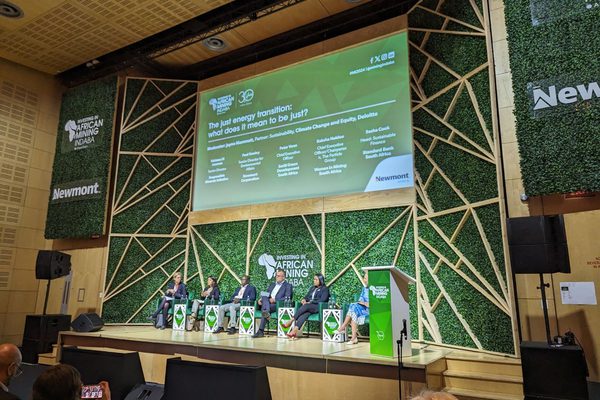
IHRB's Senior Adviser Vicky Bowman delivers remarks at the Future Minerals Forum's Ministerial Roundtable in Riyadh on 13 January 2026.
Your Excellencies and distinguished guests, thank you for inviting me to give ‘a civil society perspective’. Just as mining involves a broad spectrum of practices, ‘civil society’ encompasses a broad range of organisations and views. But generally they share a belief that:
- the benefits of mining are unevenly distributed
- the harm which mining can cause is underestimated. And costs are too often externalised on local communities and the environment.
- For local communities, mineral endowments often bring not development, but dispossession, pollution, conflict and corruption.
It is good that the Forum seeks to promote economic development through mining. But it is essential that this is not achieved at the expense of local communities. And economic development should not be measured only in terms of national GDP, but also in terms of local community benefit and empowerment, good jobs, improved welfare, and a healthy environment.
The UN Guiding Principles on Business and Human Rights are a framework which all stakeholders can use to make this kind of development more likely. They were unanimously adopted by governments in 2011 at the UN Human Rights Council. They are explicitly supported by many companies - including Rio Tinto and Ma’aden. And civil society strongly supports them too.
The work of my organisation, the Institute for Human Rights and Business (IHRB), is anchored in these UN Guiding Principles. With the support of the Swiss government, we developed guidance to help commodity traders implement them, and undertake human rights due diligence throughout the value chain, including production, processing, logistics, shipping, and security. That Guidance is regularly updated and available online.
Countries which have mineral endowments can also use the UN Guiding Principles to ensure that communities and workers are not harmed by mining. In my previous role as Director of Myanmar Centre for Responsible Business – an initiative supported by IHRB and six governments including the UK - we used them as the framework to undertake a sector-wide impact assessment (SWIA) of Myanmar’s mining sector, specifically tin, gold and limestone.
We wanted to make Myanmar’s mining sector more sustainable, and more investable. We felt a sectoral assessment would jump-start environmental and social impact assessments (ESIAs) by individual companies. We hoped it could potentially improve practice in existing mines.
This sector-wide impact assessment was the first holistic analysis of all laws and policies relevant to Myanmar’s mining sector, including safety, environment, labour, land, indigenous peoples rights, and culture. We looked at whether or not, in practice, these laws were actually protecting rights of communities and workers. Generally they were not.
Through the assessment, we also learned that companies were being driven crazy by inconsistent demands from various Ministries such as Mines, Agriculture, Environment, Home Affairs. So our assessment included recommendations to the Myanmar host government, as well as to companies, and their home governments, and to communities.
After publishing the assessment in 2018, which is still available online, we began to convene local multistakeholder dialogues on mining, in various regions in Myanmar. Unfortunately, COVID and then the military coup in Myanmar in 2021, as well as the military government’s decision to put me in jail in 2022 put an end to this work.
But it wasn’t wasted effort. I believe that this sector-wide approach, based on the UNGPs, is one which could usefully be adapted for use in other countries, including those represented here from the ‘super region’.
A baseline country assessment on human rights and mining can serve as a starting point to bring together at the provincial level for local dialogue to discuss and address local priorities and concerns. Such dialogue can support implementation of global standards and multistakeholder initiatives such as the Extractives Industries Transparency Initiative, the Voluntary Principles on Security and Human Rights, and ICoCA, the Swiss-based Association for Responsible Private Security, whose board I am on as a civil society member and which has many mining companies as Observer members.
In my career, I have had the advantage of having worked in government, for the UK, in the private sector – for Rio Tinto - and now in civil society. That apparently makes me a ‘tri-sector athlete’, a phrase I learned from Dominic Barton in his McKinsey days, although I recently discovered that Dominic borrowed it from distinguished Harvard political scientist, Professor Joseph Nye, who also coined the term ‘soft power’.
Understanding – but preferably experiencing first-hand - what others think, their motivations, and what they can and can’t do, is essential for an effective dialogue between government, business and civil society.
During my three months in a Myanmar jail, I finally had time to read Dale Carnegie’s 1936 book ‘How to Win Friends and Influence People’. Its main messages are:
1. Treat other people with respect
2. Influence through empathy, not force
3. Be genuinely interested in what others care about
It is obvious that such an empathetic approach and localised dialogue is what is needed to achieve positive results for mine-site communities and workers in the supply chain. I encourage this Forum to work towards this. Thank you.