Business and Human Rights Masters Course
2026 Curriculum Handbook
Introduction
Welcome to 2026's Masters Course on Business and Human Rights. This webpage provides full details and reading lists for this year’s lectures. It also provides short biographies of the faculty. All times for lectures are CET.
For those attending in person (weeks 1 and 4), the location is Bjørn Christiensens Hus, Aud 128, 5015 Bergen.
Practical and administrative information on the course, including zoom links for the lectures, can be found online at https://mitt.uib.no (login required).
If you would like to connect with fellow students and lecturers, past and present, please request to join the BHR Masters Course LinkedIn page: https://www.linkedin.com/groups/8968379/.
Assessment
The assessment is a semester paper/academic essay assigned at the beginning of the semester. It is mandatory to submit a draft of the exam mid-semester, on which you will receive written feedback and comments. There are no specific requirements as to how developed that mandatory submitted draft has to be, but keep in mind that the value, quality, and scope of the feedback is dependent on the effort that you put into the draft.
- The deadline for submitting the draft will be posted on the MittUiB portal in due course.
- The draft is to be submitted on the course portal, MittUiB.
- The final deadline for submitting your exam is: 1400 CET, Wednesday 9th December 2026.
- The final exam is to be submitted through the UiB exam portal, Inspera (see Mittuib for details).
Contacts
- Andrea Mevold Zakariassen (Course Coordinator, UiB) andrea.zakariassen@uib.no
- Salil Tripathi (Senior Advisor, Global Issues, IHRB) salil.tripathi@ihrb.org
- Therese Jebsen (Senior Advisor, Rafto Foundation) therese.jebsen@rafto.no
- UiB Videre (for administrative course-related questions) videre@uib.no
Feedback
We would be very grateful if you could provide feedback on the lectures/lecturers via this short survey.

Week 1 Day 1: Thursday 24th September
Bergen, Norway
Week 1 Day 1: Thursday 24th September
1430-1630: Introduction - Therese Jebsen, Jostein Hole Kobbeltvedt, Andrea Mevold Zakariassen, Terje Knutsen, Salil Tripathi
- Introduction to Rafto - Therese Jebsen, Jostein Hole Kobbeltvedt
- Introduction to the UIB - Andrea Zakariassen, Terje Knutsen
- Introduction to IHRB - Salil Tripathi
- Student Introductions
1630-1645: Break
1645-1745: Course Outline – Salil Tripathi
1745-1815: Academic Writing and Exams – Andrea Zakariassen / Terje Knutsen
**** TO BE CONFIRMED ****
1845: Pizza, drinks
Week 1 Day 2: Friday 25th September
1000-1115: What are Human Rights? - Salil Tripathi
Description and reading TBC
Required reading:
- Universal Declaration of Human Rights, United Nations (1948)
1145-1300: Business and Human Rights: Introduction - Salil Tripathi
Why should business care for human rights? A historical perspective setting out the rationale for the course leading up to the protect-respect-remedy framework. What are the drivers of change? Why do things need to change? Companies respond to positive and negative incentives to change their behaviour. These include statements of ethics and values, consumer activism, shareholder activism, trade union activism, multi-stakeholder initiatives, regulatory changes, legislation.
Required reading:
- UN Guiding Principles on Business and Human Rights, John Ruggie, OHCHR (2011)
Additional reading:
- Chapter 36, Business and Human Rights, Oxford Handbook on the UN Human Rights System
- On the Margins of Profit: Rights at Risk in the Global Economy, Human Rights Watch (2008)
- The Arc of Human Rights Priorities. A New Model for Managing Risk, The Danish Institute for Human Rights (2011)
- Executive Summary: Human Rights: Is it any of your business? Amnesty International and the Prince of Wales International Business Leaders’ Forum (2000) - NB this is a set of screenshots so the page arrows don't work!
1300-1400: Lunch Break
1400-1515: Investors and their Human Rights Responsibilities through their Investee Companies – Elisabeth Andvig (NBIM)
This session examines the role of institutional investors in advancing respect for human rights across their portfolios, situating investor action within the broader business and human rights framework. It explores the spectrum of investor tools — from constructive dialogue and engagement, to escalation through voting and shareholder proposals, to the more contested question of disengagement and exclusion. The lecture will also touch on recent debates that illustrate the tensions investors navigate, including corporate governance controversies, and where the boundaries of investor responsibility (versus company responsibility) are drawn in practice.
Reading:
Why and how investors should act on human rights - PRI guidance
Suggested readings:
- OECD (2017) Responsible Business Conduct for Institutional Investors: Key Considerations for Due Diligence under the OECD Guidelines for Multinational Enterprises —
- Our expectations | Norges Bank Investment Management
- Web report Responsible investment 2025 | Norges Bank Investment Management
- Full Report- Investor Toolkit on Human Rights May 2020c.pdf
- IUF, EFFAT-IUF, SEIU and UGT vs NBIM – Ansvarlig Næringsliv - NCP case against NBIM related to its investment in McDonald's
- Voting | Norges Bank Investment Management
- NBIM announces it will vote in favor of Palantir publishing a human rights impact assessment - Business and Human Rights Centre
- Recent decisions clarify investor responsibility to address human rights concerns, Responsible Investor 2013
1515-1545: Break
1545-1700: Corruption and Business and Human Rights - Anita Ramasastry
Corruption is not a victimless crime. In fact, it can lead to serious human rights abuses. This session will examine the relationship between corruption and human rights risks in global business activities. It will examine how businesses that engage in corrupt behavior can also cause or contribute to adverse human rights impacts. It also looks at the relationship between anti-corruption compliance by companies and human rights due diligence.
Readings:
- Stefano Pozzebon, The Bloody History Behind the $38 million Chiquita Verdict June 13m, 2024 (CNN)
- Jonathan C. Drimmer, Yousuf Aftab, Lindsay B. Arrieta, Ruxandra Cana, Steptoe Client Alert (September 2026)
- Forced Labor Import Bans and the Next Frontier of Anti-Corruption Compliance | Steptoe
- United Nations Working Group on the Issue of Human Rights and Transnational Corporations and Other Business Enterprises. (2020). Connecting the business and human rights and the anti-corruption agendas (Report No. A/HRC/44/43). United Nations General Assembly - Read pages 1-7
- International Organization of Employers, & Business at OECD. (2020). Connecting the anti-corruption and human rights agendas: Guide for business and employers' organizations. IOE-Emp Report- Skim
Week 1 Day 3: Saturday 26th September
1000-1115: Introduction to the Business and Human Rights Framework: the Alphabet Soup of BHR - Anita Ramasastry
This session will explore the different fields and acronyms that are used to describe how businesses can engage in sustainability and responsible business including CSR, ESG and beyond. It will also explore how business and human rights or “BHR” is a distinct field and set of norms distinct from other fields.
Required reading:
- Anita Ramasastry, Corporate Social Responsibility Versus Business and Human Rights: Bridging the Gap Between Responsibility and Accountability, 14 Journal of Human Rights 237 (2015).
1115-1145: Break
1145-1300: Corporate Human Rights Due Diligence (HRDD): What are the Implications of Mandatory Measures? - Rae Lindsay
Human rights due diligence is a linchpin of the corporate responsibility to respect human rights. Increasingly in recent years, States and organisations such as the EU are introducing laws and policies designed to mandate or incentivise human rights due diligence: making legal tools part of the “smart mix of measures” aimed at preventing business involvement in adverse human rights impacts and providing accountability where impacts occur. This session will review the legal developments and trends, consider business approaches to integration of appropriate compliance models and consider the effectiveness of these measures in achieving their stated policy objectives: Are they really moving the dial on best responsible business practices?
Reading:
- Optional reading material: OHCHR “UN Human Rights “Issues Paper” on Legislative Proposals for Mandatory Human Rights Due Diligence by Companies” (June 2020): https://www.ohchr.org/sites/default/files/Documents/Issues/Business/MandatoryHR_Due_Diligence_Issues_Paper.pdf
Optional:
1300-1400: Lunch
1400-1515: Sport, Business and Human Rights - William Rook
This session looks at how the UN Guiding Principles apply across the world of sport, and in particular to major sporting events. It works through the range of people whose rights are affected by an event, the global sport ecosystem and the actors within it, where human rights responsibilities sit inside a sport organisation, and how the risk picture changes across the lifecycle of an event from feasibility to legacy. Most of the session is given over to a role play in which participants take the positions of an international federation, a host state, an organising committee, a sponsor, a broadcaster and a civil society organisation, and work out where their leverage comes from, when it runs out, and what they would be prepared to commit to. The closing discussion turns to remedy, and to what the sport case suggests for business and human rights practice in other sectors.
Reading:
- Introducing human rights to the mega-sporting event lifecycle, Amis, L. and Biscoe, A. (2024), in W. Rook and D. Heerdt (eds), The Routledge Handbook of Mega-Sporting Events and Human Rights. Abingdon: Routledge, pp. 143–152.
- Seeking remedy for affected groups in mega-sporting event contexts, Heerdt, D. (2024), in W. Rook and D. Heerdt (eds), The Routledge Handbook of Mega-Sporting Events and Human Rights. Abingdon: Routledge, pp. 108–119.
Additional reading:
- The role of sports governing bodies in embedding respect for human rights into mega-sporting events, Davis, R. (2024), in W. Rook and D. Heerdt (eds), The Routledge Handbook of Mega-Sporting Events and Human Rights. Abingdon: Routledge, pp. 197–209.
- Mega-sporting event broadcasting and human rights, Thompson Oliver, M. (2024), in W. Rook and D. Heerdt (eds), The Routledge Handbook of Mega-Sporting Events and Human Rights. Abingdon: Routledge, pp. 259–269.
1515-1545: Break
1545-1700: HR Due Diligence in the Garment Supply Chain – Andrei Vasiliev
In this lecture, Andrei will explore how meaningful stakeholder engagement can be integrated into the day-to-day practice of human rights due diligence. Drawing on field experience, he will share lessons from efforts to provide access to remedy and manage critical human rights cases—highlighting both the operational challenges and the potential for shared accountability in driving long-term change in supply chains.
Reading:
Week 1 Day 4: Sunday 27th September
1000-1115: On the Ground: How HRDs Navigate Corporate Accountability in Restrictive Environments - Ingrid Rosland, Ahmad Abdallah
This lecture aims to bridge the theoretical frameworks of international corporate accountability with the lived realities of operational documentation and strategic litigation in restricted civic spaces. Utilizing firsthand practitioner experiences, the lecture will analyze how authoritarian regimes leverage state security machinery and corporate partnerships to bypass traditional environmental, social, and governance (ESG) safeguards.
- Part 1: Deconstructing the Architecture of RepressionThis section provides a comprehensive breakdown of the legal engineering used to restrict civic space, anchoring the discussion in the structural evolution of corporate, technology, and state dynamics since the 2011 Tahrir Square demonstrations. From that baseline, we will analyse modern restrictive instruments such as the NGO Law (Law No. 149 of 2019), the Anti-Terrorism Law (Law No. 94 of 2015), and the Cybercrime Law (Law No. 175 of 2018). We will analyse how these structural frameworks directly influence and reshape field documentation within the Business and Human Rights field.
- Part 2: Central Case Study: The Raml Tram Rehabilitation ProjectThis part is dedicated to one of the most recent corporate accountability cases in Egypt that ECRF has actively worked on: the Raml Tram Rehabilitation Project. The analysis focuses on the physical demolition of registered heritage assets in the historic city of Alexandria, the failure to assess critical impacts on the safety of women and girls, and the lack of mitigation regarding disproportionate impacts on vulnerable groups, including the elderly and persons with disabilities. We will unpack how these dynamics directly result from adopting a superficial, "tick-the-box" approach to public participation and human rights due diligence.
- Part 3: Tactical Tools and Transnational ShieldsThis section depicts the practical and tactical tools deployed by ECRF to counter these systemic failures. We will discuss methods for leveraging public support, mobilising supporters to launch public campaigns, engaging International Financial Institution (IFI) Compliance Pathways, activating UN Special Procedures, and implementing the strict retaliation mitigation protocols used throughout the project lifecycle.
Reading:
- Hamzawy, Amr. 2017. Legislating Authoritarianism: Egypt’s New Era of Repression. Carnegie Paper CP 302. Washington, DC: Carnegie Endowment for International Peace. pp. 3–28.Focus: Traces the legal architecture of repression following the 2013 military takeover, including the protest law, NGO regulation, penal code amendments, counterterrorism legislation, and military court jurisdiction, and analyzes their role in the systematic closure of civic space.
- Accountability Counsel. 2025. European Investment Bank: Complaint Pathfinder. Accountability Toolkit Module. San Francisco: Accountability Counsel. Last modified August 7, 2025. pp. 3–8.Focus: Explains the mandate and procedures of the European Investment Bank Complaints Mechanism (EIB-CM), including admissibility criteria, definitions of maladministration, and step-by-step complaint submission guidance.
Recommended / Further Reading:
- International Service for Human Rights (ISHR). 2021. A Practical Guide to the UN Special Procedures. 2nd ed. Geneva: ISHR.Annotation: Provides practical guidance for human rights defenders (HRDs) on engaging with UN Special Procedures, including communications, country visits, reporting mechanisms, and risk mitigation strategies.
- ARTICLE 19. 2022. Communications of the UN Special Procedures: An Advocacy Guide for Civil Society Organisations. London: ARTICLE 19.Annotation: A step-by-step advocacy guide to drafting and submitting communications to UN Special Procedures, including templates, sample submissions, and key international legal standards.
- European Investment Bank (EIB). 2022. Alexandria Raml Tram: Environmental and Social Data Sheet. Project No. 20160125. Luxembourg: European Investment Bank. October 26, 2022.Annotation: Presents the Bank’s environmental and social appraisal of the Raml Tram project, including Environmental and Social Impact Assessment (ESIA) compliance, resettlement considerations, cultural heritage impacts, and gender-related safeguards.
- Landau, Ingrid. 2019. Human Rights Due Diligence and the Risk of Cosmetic Compliance. Melbourne Journal of International Law 20 (1): 221–247.Annotation: Provides a critical analysis of superficial ("tick-the-box") human rights due diligence practices, offering conceptual grounding for critiques of corporate compliance frameworks.
1115-1145: Break
1145-1300: Workshop: Open Source Research for Due Diligence - Mark Taylor
Description and reading TBC
1300-1400: Lunch
1400-1515: Human Rights Defenders and Business – Therese Jebsen and Ingrid Rosland
Human rights defenders and businesses have historically viewed one another with deep suspicion. Business often sees HRDs as disruptors who want to stop projects from going ahead, or pressing demands that make normal business operations difficult. Even their peaceful activism leads some businesses to call upon security forces for protection. The security forces have in several instances used force disproportionately, arresting HRDs. In some cases, there have been extra-judicial executions. Lawsuits too have been filed. Activists see businesses as entities who are powerful and connected with the state, and part of the problem, not part of the solution.
Many companies have moved on from that divisive approach, and have either initiated stakeholder consultation programmes in which they invite HRDs who are critical of the companies' activities, or defended their right to dissent. Some believe that HRDs and businesses have common grounds and common interests, such as the rule of law and a level playing field.
The class will examine the emerging landscape, including the notion of 'shared space,' and take part in a set of exercises about what a company should do in three specific cases.
Readings:
- Searching for Common Ground (pages 5-21 and Conclusions and Recommendations). (Cases are optional readings).
- Shared Space Under Pressure: (pages 6-16)
Optional Additional Readings:
- Working Group's documents
- SLAPP cases
- SLAPP database - https://www.business-humanrights.org/en/from-us/slapps-database/
- Global Witness database: https://globalwitness.org/en/campaigns/land-and-environmental-defenders/documenting-killings-and-disappearances-of-land-and-environmental-defenders/
1515-1545: Break
1545-1700: Expanding Web of Liabilities - Mark Taylor
Hundreds of human rights and environmental cases against corporations have been launched in countries around the world in the past two decades. This body of what might be called 'counter corporate litigation' involves legal actions seeking to hold business actors to account for alleged violations human rights and involvement in international crimes, or harms to the environment and biosphere. Sometimes these legal actions seek remedies for victims, sometimes they are a form of strategic litigation. Usually they are both.
In this lecture, I will focus on mapping this "expanding web of liabilities", in particular the main patterns of counter corporate litigation and identify the kinds of business activity that give rise to litigation. We will discuss what these patterns tell us about the priorities for business regulation and legal reform, including the integration of human rights and the environment into legal instruments governing corporate activities, transnational approaches to corporate accountability, and a willingness to challenge unsustainable business models.
Reading:
- The Inconvenient Truth About Business, Conflict, and International Crimes in Gaza Dr. Shahd Hammouri and Mark Taylor, IHRB Comment May 2024
- Obligations of Third States to Prevent and Punish Genocide in Gaza, Dr Irene Pietropaoli, Senior Fellow in Business and Human Rights, British Institute of International and Comparative Law (BIICL), 5 June 2024
- Commercial Crime in War, War Economies and International Law (Cambridge, 2021) Mark Taylor
Additional resources:
- Red Flags, www.redflags.info
- Dutch Court Orders Halt to export of F 35 Parts to Israel, February 24 2024, Reuters
- Risks and Considerations for Doing Business in the Russian Federation and Russia-Occupied Territories of Ukraine, US Department of State, February 23, 2024
- Lundin case in Swedish courts, including podcast on the case Pax for peace
- Strategic Litigation, Trial International
- 2024 Global Human Rights Ligitation Report,OSJI
- IBA War Crimes Committee Shines Light on Corporate Liability, International Bar Association
Week 2: 9th - 11th Oct
Virtual
Week 2 Day 1: Friday 9th October
1300-1415: Documenting Human Rights Abuses and Advancing Corporate Due Diligence: Lessons from the East Turkistan - Adiljan Abdurihim
This session will explore how the Uyghur Transitional Justice Database (UTJD) documents and preserves evidence of human rights violations committed against Uyghurs and other Turkic peoples, and how this work informs business and human rights due diligence.
Over the past several years, UTJD has collected and verified thousands of testimonies and pieces of evidence relating to arbitrary detention, internment camps, forced labour, forced sterilization, enforced disappearances, family separation, and other serious human rights violations. The organization combines survivor testimony, leaked Chinese government documents, satellite imagery, official records, and open-source intelligence to build a robust evidence base for accountability and research.
A key part of this work is the use of innovative technologies. UTJD has developed detailed three-dimensional models of internment camps for virtual reality, reconstructing detention facilities based on witness testimonies, leaked Chinese official documents, architectural evidence, and satellite imagery. These reconstructions provide a powerful way to document sites that remain inaccessible to independent investigators while preserving evidence for future accountability efforts.
The session will also examine UTJD's long-term research on forced labour. Rather than focusing only on recent developments, UTJD traces forced labour practices from the beginning of the occupation of East Turkistan to the present, documenting how state policies have evolved over time and how these practices affect global supply chains.
Building on this evidence, the presentation will introduce practical approaches to corporate human rights due diligence in high-risk environments where conventional social audits are ineffective. It will also discuss UTJD's recent work testing the Transparency Act in practice, demonstrating how evidence-based methodologies can help companies evaluate human rights risks, strengthen due diligence processes, and reduce the risk of contributing to or benefiting from serious human rights abuses.
The discussion will conclude by considering how these methods and lessons can be applied beyond the Uyghur context to other conflict-affected and high-risk regions where access to reliable information is limited and responsible business conduct presents significant challenges.
Reading:
- For a brief introduction to the issue, “The Persecution of Uyghurs in East Turkistan: Extrajudicial / Extralegal Mass Internment Camps.” Ideally, we recommend reading the full report to gain a comprehensive understanding of the situation. If that is not possible, we encourage participants to read at least pages p40–41/42, through the end of the section on Uyghur Forced Labor.
- Additionally, participants may take a quick look at our report, “Uyghur Forced Labor in the Norwegian Solar Panel Industry,” particularly pages 9–19 and 63–67. This report provides a more focused overview of UTJD’s efforts to use existing Norwegian legislation to address Uyghur forced labor, as well as the limitations and recommendations identified by our organisation. The reading should help participants identify some of the dilemmas and gaps in existing due diligence regulations and provide a useful starting point for discussion during the class.
Optional reading:
For those who would like to explore the issue further, we also recommend the following UTJD publications (These publications will be available to download free of charge):
- 100 Camp Testimonies: Arbitrary Incarceration, Forced Labor, Forced Abortion/Sterilization, and Forced Family Separation
- Remolding the Uyghurs to Fit the Han-Ethnocentric Mold: Mass Internment and “Reeducation” Being the Chinese Regime’s Latest Tactics
- Untold Uyghur Stories — to be released very soon
1415-1445: Break
1445-1600: Business and human rights -- what happens when due diligence goes wrong? - Simone Rocha
Brazil is a highly illustrative case of the challenges associated with large-scale business and human rights impacts and access to remedy. Having ratified and incorporated most key regional and international human rights standards into its legal framework, the country possesses a robust normative and institutional architecture, a highly active Public Prosecutor’s Office engaged in the business and human rights agenda, and strong grassroots social and environmental organizations, some of which emerged in response to corporate activities.
Nevertheless, Brazil has also been the site of some of the most severe socio-environmental disasters of recent decades. These events have resulted, for example, in one of the largest extrajudicial agreements and access to remedy arrangements ever implemented, involving companies, public authorities, rights holders, and their representatives.
What lessons have we learned in Brazil about the limitations of human rights impact assessments—and of human rights due diligence (HRDD) more broadly—in identifying the most severe risks and implementing effective controls? How have these disasters shaped expectations regarding the BHR agenda in the country? And how have they exposed the challenges and limitations of extrajudicial remediation in large-scale disaster contexts?
I am not recommending academic papers as, in the cases we'll be studying, they can sometimes be biased or contain inaccuracies. Given the lack of sufficiently reliable and objective analyses, I suggest that we focus on the available facts, reason why I'm suggesting a few links related to the remediation processes. Unfortunately most of the material is available in Portuguese only.
Useful links:
- Documentos - Reparação Bacia do Rio Doce
- Histórico - Reparação Bacia do Rio Doce
- Reparação Mariana - Vale (newer agreements - also in English)
- A Fundação - Portal da Transparência
- Braskem - Alagoas
1600-1630: Break
1630-1745: Amazon and Human Rights Due Diligence - Leigh Anne Dewine
Description and reading TBC
1745-1845: Dinner
1845-2000: Just Transitions: What Communities Want; What Businesses Can Learn - Haley St Dennis
Transitions succeed when they are shaped from the ground up. This lecture highlights stories of just transitions in practice: from coal closures in Australia to activating the informal economy in India, forthcoming features on housing decarbonisation in Spain and agroforestry solutions in Brazil. We will also draw on practitioner insights into the “costs of green conflict” in renewable energy projects globally, and implementing the “justice” dimensions of catalytic climate finance platforms like Just Energy Transition Partnerships (JETPs) in South Africa and Indonesia. Together these perspectives help reveal how businesses can better align with community priorities to build trust-based and resilience-oriented pathways.
Reading:
Week 2 Day 2: Saturday 10th October
1300-1415: Business, Human Rights, and Indigenous Communities – Deanna Kemp
In May 2020, the mining company Rio Tinto destroyed rock shelters of considerable cultural and historic significance at Juukan Gorge, near the Brockman Iron Ore Mine, in Pilbara, Western Australia. Human rights and environmental groups protested; the community was outraged; investors revolted; the company apologized; and major personnel changes took place. The class will discuss the case.
Reading:
- Juukan Gorge inquiry puts Rio Tinto on notice, but without drastic reforms, it could happen again, The Conversation (2020)
- Rio Tinto’s statement on Juukan Gorge
- Critical reflections on the Juukan Gorge parliamentary inquiry and prospects for industry change
1415-1445: Break
1445-1600: Dalits and Discrimination – Beena Pallical
Over 210 million people live across Asia today who face caste based discrimination or discrimination based on work and descent; that is, basis of their birth into certain castes/social groups and their traditional ‘unclean’ occupations of the lowest status. They are distinguished by their segregated living spaces with severely restricted access to public and private services of housing, water and sanitation, health, education, markets, land and employment. As a consequence, there is a large gap between the general population and populations facing discrimination based on work and descent in terms of most human development indicators, with women from the discriminated communities at the bottom of the scale. In addition, in many of the affected countries persons facing discrimination based on work and descent also are targeted for severe forms of violence based on their excluded identity, often with impunity. The community in South Asia are called Dalits and are engaged in the most ‘unclean’ and menial occupation. Incidence of violence remain persistent in different forms like murder, individual and gang rape, physical assault, verbal abuse and discrimination in various sectors like education, jobs in the corporates and gender and caste based discrimination continue unabated. Women in particular experience many forms of discrimination arising from their low social position in the caste system. Similar forms of discrimination exist in Africa, Latin America and Europe.
This session will delve into the issues regarding caste and Descent based discrimination and how this has percolated to the corporate and private sector. While laws exist the businesses are caste blind and as a result several cases of discrimination has emerged not just in Asia but also in countries like the US. This session will discuss on what companies can do, what mechanisms they can have to address prevent discrimination in the workplace.
Reading (most of these are short articles):
- Caste in India: Their Mechanisms, Genesis and Development in “Writings and Speeches Vol. 1”, B R Ambedkar - It is a large volume; please read pages 3 to 22
- Cisco Caste Discrimination lawsuit in Silicon Valley, Anahita Mukherjee, The Wire
- Video: I am Dalit, How Are you?
- Corporate India has a caste problem. And it is time to talk about it, Indian Express (2025)
- The Ambedkar Principles to Address Caste Discrimination in the Private Sector
- Base Code Guidance – Caste in Global Supply Chains, Ethical Trade Initiative
- Caste remains off-limits in corporate India’s drive for diversity, FT (2024)
1600-1630: Break
1630-1745: LGBT - Frank Mugisha
What role can business play to mitigate harm from discrimination against vulnerable groups such as LGBTI people? Frank Mugisha of Sexual Minorities in Uganda will walk through the role of companies and what business can do. Salil Tripathi will introduce the UN standards of conduct for business with regard to LGBT rights.
Reading:
- Tackling Discrimination Against LGBTI People: Standards of Conduct for Business, United Nations. The report is long; recommended reading - the executive summary
- Strengthening the Economic Case, Open for Business (2022). This is a long report – please see executive summary – pages 4-5 and the Global Situation (up to page 19), and familiarise yourself with the key issues and drivers.
- The 27 Propositions, Open for Business
- Channels of Influence, Open for Business
- Opening Up The World: How Multinational Organizations Can Ascend The Maturity Curve On LGBT+ Rights, David Glasgow and Kenji Yoshino
- 2021 Universal Periodic Review Report, Pink Dot SG and Oogachaga. This reading is intended to give you an overview about the situation in Singapore. Reading the comics will be sufficient.
Additional reading:
- The Economic Case for LGBT+ Inclusion in Central and Eastern Europe (CEE), Open for Business
- The Economic Case for LGBT+ Inclusion in the Caribbean, Open for Business
- Impact report, Open for Business
1745-1845: Dinner
1845-2000: Extractivism, Abandonment and Accountability – Nnimmo Bassey
International oil companies are divesting from onshore oil fields in the Niger Delta. Those fields are being taken up by surrogate domestic oil companies. In these transactions who is accountability for legacy pollution and corporate irresponsibility? Do the divestment deals relieve the international oil companies of their duty of care for the environment? This session will address these issues as well as the state of oil wells that have been capped but not been properly decommissioned or abandoned. We will also examine provisions of the law and the demands of the communities to ongoing environmental harms.
Reading:
Week 2 Day 3: Sunday 11th October
1300-1415: Migrant Labour/Forced Labour in Supply Chains - Bonny Ling
In spite of laws abolishing forced labour and regulatory changes to protect migrant workers, many industries rely on temporary foreign workers who are vulnerable to labour abuses. They often work under high risks of debt bondage through a flawed system of recruitment and then face abusive living and working conditions, exploitation, withholding of wage, retention of personal identification, threats and intimidation and violence. The lecture will introduce the scale of the problem, the industries that are particularly vulnerable, the complexities posed by the pandemic, and raise questions about what can be done about the situation.
Required readings:
- ILO indicators of Forced Labour, International Labour Organization (October 2012)
- Forced Labour Products, European Council (December 2024)
- Pages 29-42 The Role of Supply Chains in the Global Business of Forced Labour, Genevieve LeBaron, Journal of Supply Chain Management, no. 2 (2021)
- Taiwan: 10 migrant fishers working on shipping vessel Yu Fu allege they are owed USD 80,850 in unpaid wages, Business & Human Rights Resource Centre (August 2024)
Additional readings:
- Forced labour: A Synthesis Report – Advances in Quantifying Forced Labour Across the World and Sectors, International Labour Organization (2024)
- Recognising forced labour risks in global supply chains: Sedex findings from 100,000 social audits, October 2021
- 4-min clip (made available by the Thessaloniki International Film Festival) of Buoyancy, written and directed by Rodd Rathjen; produced by Kristina Ceyton, Samantha Jennings, Rita Walsh (2019)
- Such brutality’: tricked into slavery in the Thai fishing industry, Steve Dow, The Guardian (2019)
1415-1445: Break
1445-1600: Microsoft and BHR - Jean Narechania and Nicole Karlebach
In this session, Microsoft will share how it approaches human rights across a global, highly complex business. We will discuss our human rights commitments, the evolution of our programmatic approach, and how we translate principles into practice through governance, due diligence, stakeholder engagement, and cross-company collaboration. Participants will gain insight into how we operationalize human rights, continuously refine our approach based on emerging risks and lessons learned, and navigate the challenges of embedding human rights considerations across diverse products, services, and business operations.
Required reading:
- Human rights statement | Microsoft CSR
- Fiscal Year 2025 Microsoft Corporate Saliency Assessment Executive Summary
- Fiscal Year 2025 Microsoft Generative AI HRIA Executive Summary
Recommended reading:
1600-1630: Break
1630-1745: Diversity, Equity & Inclusion and Business & Human Rights - Erika George
The current U.S. Government is attempting to rewrite the rules of Diversity, Equity Inclusion to align with a “Make America Great Again” worldview: what does that mean for the world? This class will unpack the impact of the policy shift in the U.S. and the varied ways companies, campuses, and courts are responding to demands that DEI be dismantled. It will provide an overview of the broader consequences of redefining organizational priorities in response to political pressures. Corporate purpose and values as reflected in the policies, practices, and public statements of business enterprises on inclusion, diversity, equity and access issues will be reviewed through the responsibility to respect framework of the United Nations Guiding Principles on Human Rights.
Reading:
- Reckoning: A Dialogue about Racism, AntiRacists, and Business & Human Rights, Erika George, Washington Intl Law Review (2021)
- Risks of retreat: The enduring inclusion imperative, Alixandra Pollack, David Glasgow, Tara Van Bommel, PhD, Christina Joseph & Kenji Yoshino (2025)
- UN Working Group on BHR Statement on DEI (2025)
- DEI in Transition: 2025 Corporate Diversity Disclosure Trends, Harvard Law School Forum on Corporate Governance
1745-1845: Dinner
1845-2000: Human Rights Across Complex Supply Chains – Duncan Warner
The products we buy and use every day often come from some of the most recognised retailers in the world. As consumers, we expect these companies to have carefully considered a range of factors in how they source and produce these goods. Yet, retail supply chains are inherently complex and nebulous. They often stretch across the globe, involve many tiers, and can be characterised by opaque practices that impact vulnerable rightsholders who may not be afforded the protections many take for granted. This complexity can limit a company’s ability to trace impacts, deliver suitable due diligence and effectively leverage influence – so when there are so many products and risks where do you start? How do you generate business engagement and commence the process for mapping, understanding and remediating rights holder impacts? When you find them, what do you do and who can support you?
This lecture will explore how large, diverse businesses such as retailers can align with the UN Guiding Principles on Business and Human Rights (UNGPs). It will examine the practical and ethical challenges they face, from limited traceability to the difficulties of operating responsibly potentially many tiers and time zones away from those most at risk of impact whilst ensuring businesses understand the risks and realities of impactful remediation and obligations based on actions and omissions.
Readings:
- Asda’s Standards for Suppliers - click through to document
- Asda’s - Human Rights Policy - click through to document
- Asda's approach to human rights - same link as above but full webpage
Week 3: Fri 30th Oct-Sun 1st Nov
Virtual
Week 3 Day 1: Friday 30th October - Technology
1300-1415: Tech Privacy and Human Rights - Iain Levine
The growing power and influence - and lack of accountability - of the major tech companies and the rapidly increasing impact of AI on virtually every aspect of life, provide the human rights movement with perhaps its greatest challenge. One that it is currently failing.
The class will seek to address some of the key elements of this challenge as well as the opportunities for human rights in the digital world, It will track some of the key political trends impacting the discourse around digital rights, assess the relevance of the UNGPs for developing company responses: a human rights policy; human rights due diligence and impact assessments; the challenge of stakeholder engagement - especially with underrepresented communities; protecting human rights defenders, racial and religious minorities, women and LGBTQ communities; crisis and conflict.
Building on my own experiences working for the human rights team at Meta, we will look at the roles of those inside the company, tasked with working on human rights and trust and safety and the challenges of the relationships between those working within the company and those advocating from outside to advance human rights. .
Reading:
- Meta human rights policy
- Meta human rights report 2024 (executive summary and section on human rights risk management)
- Fundamentals of a Human Rights-Based Approach to Generative AI (section 4)
- AI and the Dangerous Fiction of All Lawful Use
- Threats to freedom of expression online in turbulent times - report of UN Special Rapporteur for Freedom of Expression (section I, II, III)
1415-1445: Break
1445-1600: AI and Data Centres - Scott Jerbi
This session will examine human rights risks and responsibilities of companies working across the AI data center lifecycle. What are the current corporate accountability gaps, community and Indigenous consultation processes, and emerging regulatory responses to the rapid development of AI infrastructure projects, and how are these playing out in different parts of the world? Participants will assess AI infrastructure investment against human rights due diligence standards, and consider the extent to which past experiences from other industry sectors can inform efforts to ensure more responsible social and environmental performance by companies involved in the AI industry today.
Reading:
- AI data centers have a human rights problem, Fast Company, March 2026
- Indigenous advocates push for rights protections around AI data centers, Mongabay, July 2026
1600-1630: Break
1630-1745: Business, Human Rights, and Telecoms - Théo Jaekel
This session will provide an overview of human rights challenges in the telecom industry, with a focus on the technical aspects of surveillance capabilities, impacts related to network shutdowns and content blocking, developments in artificial intelligence and the Internet of Things etc. With years of experience from the telecom industry, Théo will discuss real life examples of company human rights due diligence measures in product development, deployment and use, limitations and gaps of such efforts, and challenges related to responding to and dealing with law enforcement requests.
1745-1845: Dinner
1845-2000: Tech and Conflict - Salil Tripathi
Description and reading TBC
Week 3 Day 2: Saturday 31st October
1115-1230: Dalits and Discrimination – Beena Pallical
Over 210 million people live across Asia today who face caste based discrimination or discrimination based on work and descent; that is, basis of their birth into certain castes/social groups and their traditional ‘unclean’ occupations of the lowest status. They are distinguished by their segregated living spaces with severely restricted access to public and private services of housing, water and sanitation, health, education, markets, land and employment. As a consequence, there is a large gap between the general population and populations facing discrimination based on work and descent in terms of most human development indicators, with women from the discriminated communities at the bottom of the scale. In addition, in many of the affected countries persons facing discrimination based on work and descent also are targeted for severe forms of violence based on their excluded identity, often with impunity. The community in South Asia are called Dalits and are engaged in the most ‘unclean’ and menial occupation. Incidence of violence remain persistent in different forms like murder, individual and gang rape, physical assault, verbal abuse and discrimination in various sectors like education, jobs in the corporates and gender and caste based discrimination continue unabated. Women in particular experience many forms of discrimination arising from their low social position in the caste system. Similar forms of discrimination exist in Africa, Latin America and Europe.
This session will delve into the issues regarding caste and Descent based discrimination and how this has percolated to the corporate and private sector. While laws exist the businesses are caste blind and as a result several cases of discrimination has emerged not just in Asia but also in countries like the US. This session will discuss on what companies can do, what mechanisms they can have to address prevent discrimination in the workplace.
Reading (most of these are short articles):
- Caste in India: Their Mechanisms, Genesis and Development in “Writings and Speeches Vol. 1”, B R Ambedkar - It is a large volume; please read pages 3 to 22
- Cisco Caste Discrimination lawsuit in Silicon Valley, Anahita Mukherjee, The Wire
- Video: I am Dalit, How Are you?
- Corporate India has a caste problem. And it is time to talk about it, Indian Express (2025)
- The Ambedkar Principles to Address Caste Discrimination in the Private Sector
- Base Code Guidance – Caste in Global Supply Chains, Ethical Trade Initiative
- Caste remains off-limits in corporate India’s drive for diversity, FT (2024)
1230-1300: Break
1300-1415: Business and Human Rights - Corporate Due Diligence at DP World Europe - Emma Cowper
This session will introduce the early-stage development of human rights due diligence within DP World Europe, part of DP World. It will outline how a regional of a global business is beginning to translate international standards into practice, including initial steps to identify and prioritise salient risks across operations. The session will touch on evolving approaches to stakeholder engagement, internal awareness-building, and cross-functional integration, noting that this work is at an early stage of development. It will consider practical aspects of implementation and share emerging insights to provide students with an overview of how due diligence approaches can develop over time within an organisational context.
Reading:
- Modern Slavery and Human Trafficking Statement | DP World -please make sure you read the European one.
1415-1445: Break
1445-1600: OECD Guidelines on Responsible Business Conduct, National Contact Point and the Right to Remedy - Frode Elgesem
In 2026 the OECD Guidelines on Responsible Business Conduct has existed for 50 years. The lecture will give a brief overview of the history of the Guidelines and the National Contact Points, followed by a deeper discussion of the importance of accountability and access to remedy for victims of business-related human rights impacts, and the OECD National Contact Points as a non-judicial complaint mechanism and its effectiveness in offering remedy.
Required reading:
- UN Guiding Principles on Business and Human Rights, Pillar 3: Access to Remedy with commentaries
- pp 58 – 73, OECD Guidelines for Multinational Enterprises on Responsible Business Conduct, (2023 Edition) Part II with commentaries
- pp 3 – 26, 50 years of the OECD Guidelines, Contributions, limitations and what is needed next, OECD Watch, June 2026
Optional resources:
- State of Remedy 2023, OECD Watch
- Justice from Below: Struggles Against Corporate Misconduct in the National Contact Point System | Nordic Journal of Criminology, Elin Jönson, idunn.no
- OECD National Contact Points as Sites of Effective Remedy: New Expressions of the Role and Rule of Law within Market Globalization? Bhatt and Türkelli, Business and Human Rights Journal
- Access to Remedy in Cases of Business-related Human Rights Abuse: An Interpretive Guide, Office of the UN High Commissioner for Human Rights, 2024
1600-1630: Break
1630-1745: Bangladesh Garment Workers - Nazma Akter
Description and reading TBC
1745-1845: Dinner
1845-2000: The Human Rights Impacts of Tariffs on Supply Chains – Sanchita Banerjee Saxena
Despite the claims of many global brands to engage in responsible sourcing practices, it is far more common for them to engage in transactional or indirect relationships with their suppliers in the global South. Research has shown, however, that a partnership or direct relationship model can create better business opportunities for both sides, as well as contribute to better labor conditions, especially during times of crisis. This class will introduce the concept of shared responsibility in global supply chains by focusing on the impetus for rethinking these relationships, the reality of the partnership model as it stands, and what elements are needed to truly build collaborative and resilient relationships. The class will include a lecture on these topics and small group work to brainstorm a new partnership model.
Reading:
- Unprecedented tariffs call on us to reimagine more equitable supply chains, IHRB, May 2025
- Why Top Apparel Brands Fall Short in Supplier Partnerships. Supply Chain Dive, Jan 2024
- Are Fashion’s Buying Practices Really Improving Vogue Business
Week 3 Day 3: Sunday 1st November
1300-1415: Conflict and Humanitarian Law: Challenges for Business in High-Risk Areas – Claude Voillat
Business companies may wish to avoid operating in or being associated with conflict-affected regions or high risk areas, but many of them do not have that luxury. When doing business in conflict-affected regions, companies run the risk of triggering adverse impacts both on the conflict dynamics as well as on the people and communities, either directly though their operations or indirectly through their products, services or relationships. If not managed properly, doing business in conflict-affected regions may also unleash adverse impacts on the companies themselves, be it on the legal, operational, financial or reputational fronts.
The session will explore the particular context of conflict environments, the laws that businesses are required to uphold, the legal protections they enjoy in such environments, and the broader regulatory and societal expectations. The lecture will be delivered by a former official of the International Committee of the Red Cross (ICRC) who has worked closely with conflicts for +30 years and is passionate about the challenges of business activities in such environments.
Reading:
- Private Businesses and armed Conflict - An Introduction to Relevant Rules of International Humanitarian Law, by the International Committee of the Red Cross, The Australian Red Cross and the French Red Cross, 2024 – as this document is quite long, students can read just Chapters 1. and 2.)
Additional non-compulsory reading:
- Business, Human Rights and Conflict-Affected Regions: Towards Heightened Action, by the UN Working Group on Business and Human Rights
1415-1445: Break
1445-1600: Business, Human Rights, and High Risk Environments - Anton Mifsud-Bonnici
This session will begin with a brief discussion between Claude and Anton moderated by Salil, followed by a wider discussion with the class. The approach is to assist the participants, especially those working within business, to probe the new business reality in which both traditional and new business operate globally.
Questions will open topics such as where does corruption fit in the making of a high-risk and conflict prone environment? What do payment systems, stable coins, betting systems have to do with conflict? What do minerals and renewable energy, data centres have to do with drone warfare and AI? We will bring some real life experience in addition to dogma and traditional frameworks. We will refer to forks in the road for asset owners and asset managers, for short term and domestic investors, for license holders and regulators.
The discussion will offer both "balcony" and "dance floor" views of the conflict intense world confronting any business today.
Finally, we shall also throw in some thoughts of what happens next, when the world again seeks and finds stability, and what that will mean for those working in a business retaining an effort of respect for well governed human rights-friendly democratic environments.
1600-1630: Break
1630-1745: Responsible Exits (Case Study) – Salil Tripathi
Description and reading TBC
1745-1845: Dinner
1845-1200: Operating in Occupied Territories - Western Sahara Example – Erik Hagen and Asria Mohamed
Western Sahara is treated by the United Nations as the last unresolved colonial issue in Africa and the territory’s people have the right to self-determination and independence. This right is rejected by neighbouring country Morocco, which occupies the territory. Corporations – primarily in the sectors of renewable energy, fisheries, minerals and infrastructure – strike deals with Morocco for exploitation of the territory’s resources, without taking into account the applicable international law. International courts repeatedly conclude on the Saharawi people’s side. Western Sahara Resource Watch will present how they expose the foreign corporate activities in the territory, and how they challenge them, with success.
Reading:
- Above the Law, Western Sahara Resource Watch, 2020
- P for Plunder 2025, Western Sahara Resource Watch, June 2025
Week 4: Fri 20th - Sun 22nd Nov
Bergen, Norway
Week 4 Day 1: Friday 20th November
1000-1115: Due Diligence in the Extractive Sector – Froydis Cameron-Johansson
In an ever-changing context, how do companies approach human rights? How has the Human Rights focus evolved over the years and how do companies practically embed and bring alive policies, procedures and regulation. What do meaningful due diligence and consultation look like when transparency and access are becoming harder? With 30 years in the extractives across every continent, this is a practical guide providing insights on how large extractive companies approach human rights, where they get it right and wrong and who’s doing it well.
Reading:
- Community matters: Mining, local engagement and the race for critical energy transition minerals, S&P Global (2025)
1115-1145: Break
1145-1300: Meaningful Consultation in the Extractive Sector – Froydis Cameron-Johansson
What does it even mean? Is it even possible and how do you go about it? Companies and communities often clash over issues such as environmental degradation, and disputes over land rights and consent for nearby land use. ‘Meaningful consultation’ is seen as a foundation to resolve these issues and build long term relationships, but do companies really understand what these to words mean and what it takes and to build a two-way dialogue underpinned by trust and meaningful action?
Reading:
- Podcast on meaningful engagement with Salil: https://pod.fo/e/4147c8
- Community matters: Mining, local engagement and the race for critical energy transition minerals, S&P Global (2025)
- ICMM position statement on IP.
1300-1400: Break
1400-1515: Corporate Due Diligence at Equinor - Marte Stensrud
Equinor is an international energy company headquartered in Norway with around 25,000 employees and offices in more than 20 countries. Equinor is a major supplier of energy to Europe, with a portfolio that encompasses oil and gas, renewables, and low-carbon solutions.
In this lecture, we will dive into Equinor’s key human rights risks, what they have learned after more than ten years of applying the concepts of the UNGPs in their business and how they see the future for human rights and business.
Reading:
- The Sustainability Statement in Equinor’s annual report for 2025 Annual Report 2025 , in particular the Social chapter (from page 132)
1515-1545: Break
1545-1700: Embedding respect for human rights in a global business - making the UNGPs work in practice - Alinde Melin
While the UNGPs provide a clear framework for responsible business conduct, implementation remains challenging. Drawing on practical examples and lessons learned, this lecture will explore the capabilities, leadership and organizational developments needed to enable effective human rights due diligence and meaningful impact.
Reading:
- Due diligence in the downstream value chain: case studies of current company practice, Danish Institute of Human Rights
Week 4 Day 2: Saturday 21st November
1000-1115: Shipping and Human Rights – Francesca Fairbairn
When we think of supply chains we tend to think of mines or farms, construction workers or factories, possibly fulfilment warehouses or retail stores, cars or phones. But between every stage of processing, stuff is transported, mostly by ship. 90% of world trade travels by sea. Raw materials may end up make many journeys by ship before they reach their end consumer. And all of this is managed and delivered by the world's merchant navy: 1.8 million seafarers on 60,000 vessels. Who is responsible for their welfare?
Reading:
- Flags of Convenience, Mark Pieth, Kathrin Betz, 2024 pp37-40 and pp80-91 - also look at the contents page
- Dark fleet doubles down with false flags as regulators left chasing shadows, Splash247, September 2025
- The psychological toll on seafarers trapped in the Strait of Hormuz, SeatradeMaritime News, May 2026
1115-1145: Break
1145-1300: Gender-based Discrimination and Corporate Issues - Harpreet Kaur
Corporate sustainability policies and due diligence processes often appear neutral on paper, yet remain gender-blind in practice. This session examines how gender and intersecting identities shape corporate impacts across workplaces, supply chains, products, and host communities ranging from wage gaps and harassment to exclusion from decision-making and barriers to remedy. Drawing on the Gender Guidance to the UN Guiding Principles, participants will move beyond the basic "business case" for diversity toward approaches that address systemic power imbalances. Practitioners will learn to identify differentiated impacts, interpret disaggregated data, engage affected stakeholders safely, and design gender-responsive due diligence and remediation strategies.
Reading:
- Götzmann, Nora, Joanna Bourke Martignoni, Bonita Meyersfeld and Harpreet Kaur, “From Formalism to Feminism: Gender, Business and Human Rights”, Business and Human Rights Journal, 7(1), 2022, pp. 1–11
- BSR, Making Women Workers Count: A Framework for Conducting Gender-Responsive Due Diligence in Supply Chains (2019), Executive Summary and Part I
Additional recommended reading:
- OECD, Integrating a Gender Perspective into Supply Chain Due Diligence
- UN Women and UN Global Compact, Women’s Empowerment Principles
1300-1400: Lunch
1400-1515: What Does 'Good' Look Like? - Justine Nolan
There is an urgent need to develop more sustainable business practices. Historically, research and advocacy in business and human rights has predominantly focused on the negative actions of business but we also need to provide examples of what business can do right. This lecture will discuss case studies and lessons learned from more than three years of field research that has identified business practices that empower stakeholders, collaborate with suppliers and employ innovative techniques to support monitoring and accountability. By doing so we aim to demonstrate what effective human rights due diligence looks like in practice and understand the success factors that can transform business practices in global supply chains.
Reading:
- Dorothée Baumann-Pauly, Justine Nolan and Andy Symington, Transforming Business: Aligning Profits with Human Rights, Taylor and Francis, forthcoming 2026 - Chapter 8 ’Transformation Formula: Core Components for Changing Business Models'. Please note - this will be published in early November - a draft will be available for reading in September.
1515-1545: Break
1545-1700: The Rise of China and its Impact on Human Rights - Isabel Hilton
On China; how we got to this moment; what are the stresses and tensions inside the Chinese economy and politics, and how these shape how the world looks from China.
Reading (NB same reading list as for Isabel's second lecture):
China, Climate & Clean Technologies
- Ember, China Energy Transition Review 2025 (pp. 13–41) (power-sector transition, electrification)
- Agora Energiewende, China's Energy Transition and Climate Status Report 2026
- IEA, Tracking Clean Energy Innovation: Focus on China
- www.dialogue.earth (formerly Chinadialogue.net) archive on China and climate change dating back to 2007.
Recent History & Economy
- CRS (Congressional Research Service), China's Economic Rise: History, Trends, Challenges, and Implications for the United States
- Rhodium Group, China's Economy: Rightsizing 2025, Looking Ahead to 2026
- Foreign Affairs / CFR, Michael Froman, "How China Won"
- https://decodingchina.eu/
Week 4 Day 3: Sunday 22nd November
0900-1015: The Role of Business in a Changing Geopolitical Landscape - Isabel Hilton
What China’s rise has meant for the global order and how China is reshaping global norms; China’s dominance in a series of sectors, including climate technology and what are the planetary and geo strategic implications.
Reading (NB same reading list as for Isabel's first lecture):
China, Climate & Clean Technologies
- Ember, China Energy Transition Review 2025 (pp. 13–41) (power-sector transition, electrification)
- Agora Energiewende, China's Energy Transition and Climate Status Report 2026
- IEA, Tracking Clean Energy Innovation: Focus on China
- www.dialogue.earth (formerly Chinadialogue.net) archive on China and climate change dating back to 2007.
Recent History & Economy
- CRS (Congressional Research Service), China's Economic Rise: History, Trends, Challenges, and Implications for the United States
- Rhodium Group, China's Economy: Rightsizing 2025, Looking Ahead to 2026
- Foreign Affairs / CFR, Michael Froman, "How China Won"
- https://decodingchina.eu/
1015-1030: Break
1030-1145: BHR in Asia - Harpreet Kaur
Asia’s business and human rights landscape is being reshaped by growing national policy commitments, evolving market and regulatory expectations, and greater scrutiny of corporate impacts across complex supply chains. Yet implementation must contend with the region’s diversity, the prevalence of informal work and small and medium-sized enterprises, limited supplier capacity, shrinking civic space, and persistent barriers to remedy. This session examines how the UN Guiding Principles are being translated into corporate practice across Asia, and where conventional audit and compliance models fall short. Drawing on regional examples, participants will explore how to identify salient risks beyond first-tier suppliers, exercise leverage responsibly, strengthen supplier capacity, engage workers and communities meaningfully.
Reading:
- UNDP, Business and Human Rights in Asia: From the First Decade to the Next—Reflections and Directions (2022), Executive Summary, pp. 9–18.
- Karim, M. F., & Asanti, A. (2026). Markets over rights? Fragmented regionalization of business and human rights in ASEAN. Journal of Human Rights, 25(2), 164–181. https://doi.org/10.1080/14754835.2026.2621344
1145-1200: Break
1200-1315: “Last Lecture” – Salil Tripathi
As we end the course, some questions for the future. What is the purpose of a company? What should it do? Who does it benefit? Who does it serve? What should individuals working for companies do? What should drive their conduct?
Not required reading but worth reflection:
- Friedman’s essay in 1970
- Essays on Friedman at 50
- 50 Years of Friedman - symposium
- The Shareholder Value Myth, Cornell Law Library
- Video on ‘purpose’ and profit
- Essay on The Purpose from the Nation
Meet the faculty

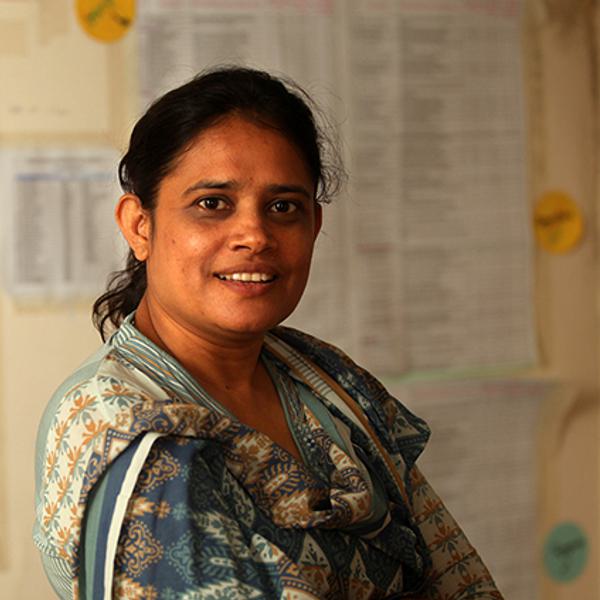
Nazma Akter
Director of AWAJ Foundation

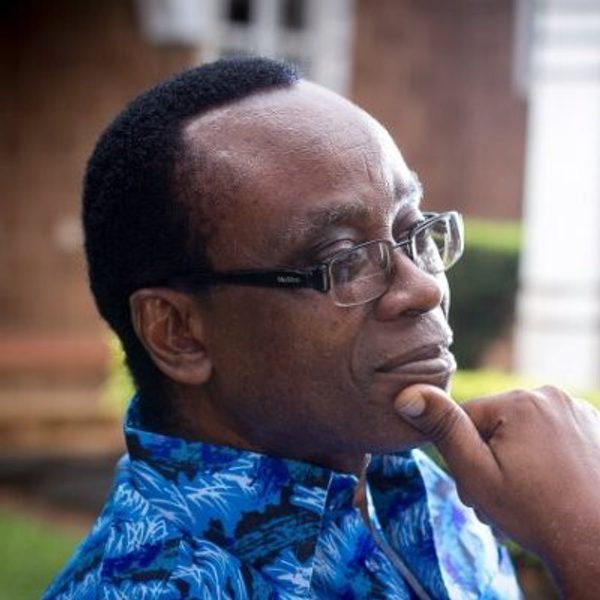
Nnimmo Bassey
Director, Health of Mother Earth Foundation (HOMEF)













Iain Levine
Director, Human Rights Policy, Meta